Showing posts with label Oligarchy. Show all posts

Saturday, June 10, 2017

Why The Berniecrats Aren't Going To Back Down


https://i.ytimg.com/vi/zF85iT0iFZo/maxresdefault.jpg

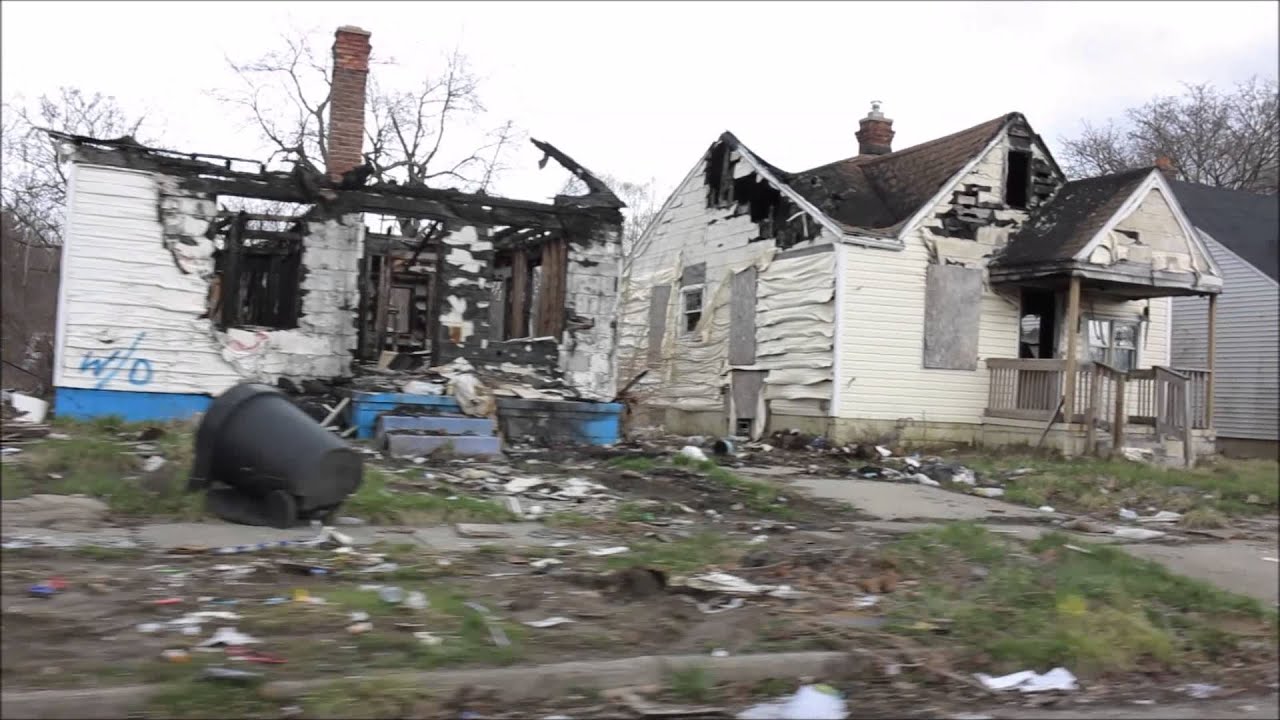
The houses above, like tens of thousands of others in Detroit, obviously used to look very different. But then came the advent of what was at first seriously referred to as "free market capitalism," followed by what was initially called "job-creating" free trade, followed by what was at least honestly referred to as the Great Recession. Throughout these developments, most in Detroit and America overall have seen the opposite of freedom or job creation. They've seen their livelihoods taken away for the benefit of a few corporate executives. They've seen their tax dollars used to fund unending wars (the volunteers for which largely came from poor areas of color like the one pictured), along with trillion dollar bailouts for the billionaires who caused the economy to crash. They've seen the system be redesigned to make it much harder for people like them to live happy, secure lives.

They've also seen the way those responsible for their misfortune have overwhelmingly responded to it: by blaming the victims. Just like hatred towards blacks had to be propagated for slavery (and the parts of its legacy) to be widely accepted, hatred towards the poor has been instrumental in selling the neoliberal enterprise. Thus the countless statements over the last few decades from corporatist politicians, right wing media figures, and thus tens of millions of ordinary people about how poor people aren't trying hard enough, how they aren't entitled to anyone else's money, how they should be self-reliant, etc. At no point has the majority of the population accepted this classist ideology, but the fact that it's been pushed so aggressively has had the desired effect: everyone who's grown up in lower class lifestyles throughout the last forty years or so is familiar with the view that people like them shouldn't be complaining about their situation.

The unintended problem with this is that when people are told their struggles are illegitimate and they should just accept the status quo, they do the opposite of become compliant. Except in the statistically rare cases where they've shown to fall for this neoliberal gaslighting, those left behind by the current system have overwhelmingly come to reject the oligarchy's agenda in recent years. This is clear in how the majority of Republicans now support single payer health care, higher taxes on the rich, and ending neoliberal trade despite their different views on these things in the recent past. More importantly, this awakening has shown in the emergence and so far spectacular success of the Bernie Sanders revolution, with tens of millions of people now actively working towards bringing the changes our society desperately needs.

But once again, while the dissenters represent the majority, we haven't been able to do our work for this movement without intense disdain from within the beltway. The attacks against us involving Stalinism have thankfully been relatively rare, but the more mainstream anti-Sandersisms, as articulated by outlets like the Washington Post, haven't been any less disingenuous: Bernie Sanders and his supporters are fringe, are purist, are unrealistic, etc. When the majority of the country backs Sanders and his ideas, the best the oligarchs can do is try to convince those in that majority that they're naive. And once again, as I'll illustrate, such tactics have a way of backfiring.

To the rank and file establishment loyalists, corporate news columnists, and occasional Goldman executives that denigrate what we're doing, I'll say it in a more complete and direct way than I've said it before: the Berniecrats will not back down. Just like we wouldn't accept that the status quo shouldn't be challenged, we will not accept that challenging it is naive.

We will not accept that a party which has hurt people of color through mass incarceration more than Reagan did, reordered the global trade system to benefit large corporations, caused the Great Recession by deregulating Wall Street, made the difference in Senate votes for the Iraq War, set us up for a new crash by refusing to adequately re-regulate Wall Street, escalated Bush's wars, took us to the brink of climate collapse, and so much more is an adequate alternative to the GOP. Nor that this party did not undeniably and directly steal the Democratic nomination from Bernie Sanders, who the majority of the Democratic base has embraced.

We will not accept that goals like keeping corporate money out of politics, ending the paradigm of perpetual war, and single payer health care are unrealistic when all of Bernie's agenda is not just practical, but politically attainable due to the revolutionary dynamics that are emerging amid staggering economic inequity. Nor that the American people, who are found in every public opinion poll to support these reforms, will reject Sandersist candidates in the coming years for offering them.

More to the point, we will not accept that those on the receiving end of the destructive policies Sanders' critics often champion shouldn't see their concerns addressed. We will not tell the Detroit workers who've lost their homes because of neoliberal trade and Wall Street greed that they're naive for wanting these things stopped. We will not act like the tens of millions of Americans now living in third world conditions because of lack of an adequate minimum wage, lifetimes worth of student loan debt, and an outrageously racketeered health care system aren't realistic for wanting these problems alleviated. We will not dismiss the struggles of the millions of people who've been unjustly incarcerated, the tens of millions who can't afford their obscenely overpriced prescription drugs, or the countless families throughout the global south who've been literally torn apart by the U.S. military empire because anyone says doing so would be impractical.

The political establishment essentially used this strategy of telling disadvantaged groups that their concerns are naive as a means to beat Trump last year. As a result, enough lower class and nonwhite people chose to opt out of voting for Hillary Clinton, and enough downtrodden Rust Belt residents chose to vote against Clinton, that the unthinkable happened. And now, as the majority's concerns continue to be sneered at by the members of the McResistance, an insane specter looms: when a major U.S. terrorist attack inevitably occurs sometime soon, and the Trump regime no doubt lays the case for totalitarian lockdown in response, most Americans, I predict, will jump on board the push towards nationalistic fanaticism. Because at least the faux-populist right wing extremists in the White House are different from the "moderates," who mock the very idea of change and barely even pretend to care about the needs of ordinary people.

Society is on the brink of willing self-destruction because of the political establishment's condescending and callous attitude towards the have-nots, and Berniecrats aren't going to stand for it. We will continue promoting our progressively populist message as an alternative to the Trump team's reactionary temptations. It may not be what Paul Krugman wants us to do, but it's what the people who used to live in the houses above would probably want us to do.

Tuesday, June 6, 2017

Democratic Loyalists Are The Trump Regime's Greatest Asset

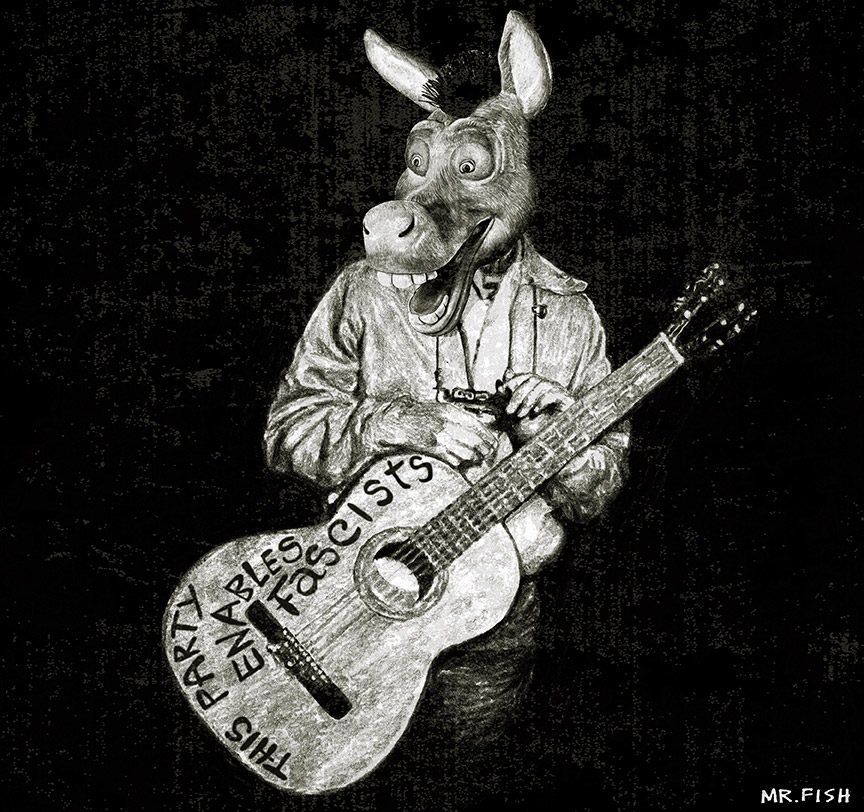
http://www.clowncrack.com/wp-content/uploads/2016/11/This-Party-Enables-Fascists.jpg

I recently learned that I'm a sexist. The news seemed a little unexpected at first, as it was delivered by a man who actively supports an abashedly anti-woman agenda, but since he professed to know so much more than I do about advancing equality, it was only honorable for me to accept his judgement. Namely, that I and all the others who'd like to see Nancy Pelosi replaced by Sandersist insurgent Stephen Jaffe in 2018-and by extension, who want to see the Democratic Party start working for the people-seek these things out of naturally bro-ish contempt for women like Pelosi.

My respect for this columnist's striking insight into the minds of tens of millions of people he's never met was unchanged as I read further. The reason besides misogyny that we want to primary Pelosi, he keenly observed, was because she doesn't support single payer health care, which has no chance of passing anyway despite its now bipartisan majority support, and Pelosi has done some good things despite her otherwise staggering history of betraying progressives, and Jaffe isn't a progressive himself because of his non-policy related personal characteristics, and so on till the Berniecrats are hopefully so overwhelmed by this barrage of baseless attacks and efforts to change the subject that they leave the Democratic establishment alone.

And so on indeed. When we stand up to power, we can always expect to be met with unrelenting efforts from the ruling class' surrogates to gaslight us, to marginalize us, to make us feel like our concerns are absurd. This has always been the case when rulers have been challenged, but in modern times it's different. Never before most people's lifetimes have oligarchies been able to surveil the entire citizenry. To impose themselves and their ideas on all aspects of life. To endlessly perpetuate war with impunity. To wipe out massive populations and resources in an instant. To steal sizable fractions of the world's wealth with such little effort. So the modern oligarchy's propaganda has become naturally elevated as well.

The ruling class controls the vast majority of the media Americans consume, much of our political and legal institutions are engineered to control the outcome of elections. Dissidents can be persecuted with relative ease. So defending the status quo, especially when it comes to the Democratic establishment, has become a convenient task. You're remembering things wrong, the modern establishment propagandist can so easily say; millions of Sanders voters were not disenfranchised last year, Russia was not considered an ally just a few years ago, a new housing bubble did not appear during Obama's term, etc., etc. Nearly all media statements and public records can be revised to fit the oligarchy's narrative, so its deceptions are made virtually unassailable-and its presence is made seemingly unshakable.

I imagine you've guessed by now how this relates to the article's title. When a political establishment like this exists amid a rogue new administration's attempts to create a self-styled dictatorship, it's inevitable that these two forces will merge in their shared mission of dominating society. Numerous instances have come up of the Trump regime working with the Deep State to conquer the world, from new Washington Post columnist John Podesta's praising Trump's military budget increase, to Trump's responding to the neocons' Russiagate outcries by attacking Syria, to Trump's trying to prosecute Julian Assange.

As the geopolitical horror show goes on, the Deep State and the Trump administration will no doubt grow further united, such as when they'll partner in launching the next American imperial war after the next major terrorist attack gives them an opening. The factions within the ruling class are mutually moving in for an unprecedented seizure of power, and it doesn't matter that one of those factions-the Clinton Democrats-claims to oppose the other. They're still both participating in the takeover.

This is what Democratic loyalists like the one mentioned above are working towards when they attack the so-called radical left's efforts. Whether said exposer of my sexism is unaware that Pelosi is on record for supporting a litany of right-wing policies and fully capitulating to the post-9/11 Bush administration, or whether he thinks she's an acceptable Trump opposition leader in spite of this, the message is clear: so many Clinton Democrats are willing to give the Trump regime an easier path to autocracy if it means their favored Democratic leaders stay in power. And this attitude has been observed within all parts of the establishment liberal echo chamber, from the Clintonite columnists who were so eager to defend the Senate Democrats that voted for Trump's cabinet nominees to the Democratic loyalists who continue to insist, against all evidence, that moving left is a bad electoral strategy for defeating the GOP.

But there I go, talking about the standard political horse race like it will have any relevance amid the harsh, not so superficial reality to come. The financial framework is on the verge of collapsing. The Deep State's plans for war with Russia, along with Syria, Iran, and maybe even North Korea, are close to being realized. The nation is a major terrorist attack away from having its ailing democracy blown to pieces by the fanatics in the White House. There's no telling what things will look like by the next midterm or presidential election, but it's certain they'll be radically changed for the worse-perhaps so much that the elections won't take place. Regardless, most Americans will likely be focusing on crisis-induced paranoia and jingoism rather than on any elections, with a great deal of the Democratic base being no exception.

As for those who put their country above their party, be only emboldened by the establishment's attacks against you. In response to Trump's pulling out of the Paris climate deal, join Democratic Socialists of America instead of a professedly pro-climate action group that's unwilling to fight corporate power. Do all you can to help Berniecrat Tom Perriello win the Virginia Democratic gubernatorial nomination on June 13 rather than his unreliably anti-Trump opponent Ralph Northam. And most importantly, don't concede the war of ideas to the defenders of the oligarchy. For all their clout, they can only manipulate the interpretation of reality, not change it. And that will be their downfall.

Friday, May 12, 2017

Your Inner Propaganda Radar Is Right: The Late Night Comedians Are Establishment Mouthpieces

http://static.politifact.com.s3.amazonaws.com/politifact/photos/john-oliver.jpg

You're watching John Oliver, Bill Maher, Samantha Bee, or another given member of the late night comedy crew that's become so successful in the Trump era. As usual, their jokes about whatever ludicrous developments have that come of late are top-quality amusing, as are the videos and images they've made to accompany it all. But then (hopefully) you see something that gives you a certain, uneasy feeling.

You know what I'm talking about. It's that off-guard sense every free thinking person has gotten at some point while extolling the segments of these late night self-described liberal comedians, one which vaguely but undeniably tells you you're watching a slyly presented piece of establishment propaganda. This feeling used to only appear from time to time, being triggered mainly by the occasional production of drone war propaganda slipped into the comedy crew's programming. But since Bernie Sanders kicked off the battle to take back the liberal class, modern late night liberal comedy's true colors have shown frequently and with all their characteristic ugliness.

Correct me if I'm wrong, but their attacks on Bernie and what he stands for seem to have begun in April 2016, when Sanders was finally getting successful enough in the primaries for most of the beltway to take his candidacy seriously. That was when Samantha Bee-who, as we'll see, is the most blatant establishment mouthpiece of them all-did a segment wherein she interviewed a group of Sanders supporters. Despite Bee's professed motive to get an understanding of the optimism these Berners were feeling, the scene had a "well I'm glad you guys are keeping your heads up despite not being able to win" message that reeked of veiled condescension. And that was just the start of it.

By mid-May Bee's treatment of Bernie Sanders supporters had turned from condescending to negatively generalizing to outright lying about us and our concerns. In response to Sanders supporters' crying foul about the Nevada Democratic Party's inexcusable and blatant pro-Clinton rule changes, she blamed them for being excluded from the event by the dozens and used it as an opportunity to call out Berners' similarly sore loser attitudes towards the numerous other primary contests that Clinton had stole fair and square. Jon Oliver followed suit, ending his segment on the Nevada convention with an extremely deceptive monologue debunking an array of potential ways Sanders supporters could claim the primary had been rigged while addressing exactly zero of the concerns we actually had.

After Bill Maher gave his own non-address post-stolen California primary to Sanders supporters who dared  dispute the results of the primaries, it was on to the attacks against those who dared not to accept the Democratic candidate that "won" under these circumstances. Samantha Bee devoted her episode on the Democratic National Convention to mocking the grievances being aired by the Bernie Sanders protestors there, throwing in all the disingenuous epithets about "white privilege" and accusing them of disregarding the concerns of disenfranchised groups while declaring the millions of Sanders supporters who'd had their voices taken away during the primaries to be sore losers. Then in October, Jon Oliver paid a similarly honest tribute to those disenfranchised Sanders supporters who'd defected to Jill Stein by shamelessly smearing Stein and third parties in general.

And late night comedy's war on genuine progressives hasn't let up a bit since the election. In February, Samantha Bee finally let her true feelings on Bernie Sanders show by calling him a "mansplaining prick." In March Bee went out of her way to inform us that the Deep State-i.e. a system that allows elites to primarily call the shots-doesn't exist. In April Trevor Noah, usually a less blatant member of the dissent-crushing late night comedy team, essentially excused Obama's serving Wall Street as president by saying "fuck you!" (I quote) to those complaining about his taking Wall Street speaking fees. And recently Bill Maher spoke similarly to the Bernie or Bust movement, which, while I wasn't part of, I should defend from Maher's disingenuous attacks (he didn't acknowledge the major concerns Bernie or Busters had with Hillary Clinton, such as her wanting to start war with Russia).

In case you're wondering after seeing me state that last fact, the reason I wanted Clinton to win was so that those beholden to her and her party could see for themselves the horrors that would come from supporting neoliberal, warmongering leaders. We'd likely be in combat with Russia by now had Clinton won, but at least this would get the other half of the left to wake up. Since this hasn't happened, though, the Democratic establishment's media gofers have been able to more easily point to Trump and the GOP as the source of every problem, as the audiences of those late night comedy gofers cheer uproariously at their wry observations and critics hail them as righteous gatekeepers of democracy.

To state the by now painfully clear, your built in establishment propaganda radars aren't overly sensitive. These comedians, talented as they are, have been admitted into the upper ranks of corporate media punditry for more reasons than talent: they're up there because they aren't willing to challenge the status quo. Even the late night comedians who seem to personally resent the Democratic establishment, like Seth Meyers with his pointed criticisms of the Senate Democrats who voted to confirm Trump's cabinet nominees, are not really speaking truth to power. In those instances they've criticized Democrats without focusing on parts of the big picture, like the Democrats' push for war with Russia or their unacceptable embrace of corporate cash.

And don't assume these figures are simply trying to toe the line between the Clintonist and Sandersist facets of their audience. They could do this without making the dishonest statements mentioned, and while fully addressing the problems with the Democratic establishment.

In short, whether or not these skilled spokespeople for the plutocrats like it, they know they can't challenge the status quo in their positions. When you make political jokes on the corporate media outlets while presenting yourself as a progressive, you can only go so far as the standard partisan cracks about how awful those Republicans are before the boss starts to get uneasy. And until the proportions of media company ownership, along with the prevailing political culture within the Washington beltway, are brought back to their post-New Deal states, there's no use in replacing the current late night comedy cast. As long as there's an oligarchy, there's going to be laugh out loud jokes continually presented to us which promote the oligarchy.

My fellow progressives, we need to stop pretending the celebrity clowns are on our side. As I just illustrated, they're decidedly not, and we need to reject their power serving material as we reject the joke-free power serving material from the CNN pundits. Because when we do that, we can start focusing not on pushing against what we don't like but pushing for what we want. Call members of Congress about supporting the H.R. 676 single payer health care bill. Voice your support for Bernie Sanders' likely 2020 successor and all around bane to the establishment Tulsi Gabbard, and donate to her campaign for peace. And do so while leaving behind the naysayings of the status quo's defenders so you can focus on the fact that we can and will win this.

Wednesday, March 29, 2017

Why The McResistance Is Just As Dangerous As The Trump Regime


Last month, I penned an article that would go one to become one of my most popular works, titled Why I Fear The Democratic Establishment Just As Much As I Fear Trump. In it, I chronicled the saga of egregious acts employed by Democratic elites throughout the last two years-rigging the 2016 Democratic primary, then denying doing so, then starting a McCarthyite campaign that could result in war with Russia. You know, the usual-before concluding on the more hopeful note that these tactics have been employed because the oligarchs in control of the party know their reign is in danger of coming to an end. And now I'm following it up with a piece articulating why, in addition to fearing Trump and the neoliberal Democrats equally, I view the so-called resistance movement and the Trump administration as equally big threats to the country's future.

Namely, because the neoliberal Democrats are now aiming to continue their reign by going so far as dismantling the democratic process itself.

I'd first like to make clear to any pro-establishment liberals reading this that when I attack this movement-which my fellow blogger Caitlin Johnstone has so appropriately classified as the "McResistance"- I'm not helping Trump in the least. Because as David Rosen assesses, the persons and entities behind the McResistance are not actually resisting Trump: "Trump changed the game of establishment politics and now is president. The Democrats are floundering, unsure of how to face the demands of a trying historical test. The Democrats, overseen by Sen. Charles Schumer (D-NY), Wall Street’s inside man, have no clue as to what to do. The social order is in crisis, undercut by the restructuring of global capitalism, and he lacks the vision to see what’s going on, let alone do anything to address it. Equally challenging, he seems to be losing party discipline, with Wall Street Democrats in panic. Most revealing, today the Democrats follow — do not lead! — the popular insurgency spreading the country."

Additionally, Democrats like Schumer clearly don't even have any desire to fight against most of Trump's agenda, such as expanding the U.S. military empire, transferring wealth to the top, and taking away civil liberties, seeing as they share those goals with Trump. So by going after the McResistance, I'm not hurting a movement that fights the Trump agenda, but quite the opposite.

What is the point of this movement entities like the Democratic Party, the military and intelligence community elites, and much of the corporate media have gone to so much trouble in putting together if they don't even truly intend to fight Trump? That question was cleared up for us on March 8, when Politico published an article titled The Resistance Will Be...Underwritten By Corporations. You'd assume from the headline that it's a piece sarcastically denouncing the involvement of corporate and billionaire money with a movement whose anti-corporatism is crucial for its success, but in a political landscape so defined these days by Orwellian logic, intuition doesn't apply to things like this. The piece, it turns out, is a happy endorsement of corporate money.


It begins as follows:
Late last month, a few hours before the Democratic National Committee elected Tom Perez as chair, party officials held a vote on whether to accept donations from corporate political action committees. The debate was not conducted in the backroom, but in front of C-SPAN cameras. And Democrats, loudly and proudly, chose to accept corporate cash.
On the floor, California’s Bob Mulholland, after conceding, “I’m not a member of Mother Teresa’s sisters’ organization. I am a member of the Democratic Party” swam against the populist tide: “All those corporations in North Carolina, who stood up for the Democratic Party platform against the law there to try to outlaw or discriminate against transgender [people], why should the Democratic Party say now, ‘Hey, great what you did, but we’re not gonna take your contributions?’” Charles Stormont of Utah contended Democrats can safely accept money from corporations “as long as they understand I will treat them no differently because of it” while warning, “We cannot afford not to take corporate money, or we disappear.”
Any half-respectable journalist would have followed up by pointing out the outrageousness of those statements. Namely: A, Mulholland basically bragged about the Democrats choosing not to do the most good possible, B, he then simultaneously implied both that Democrats can't choose to fight for transgender rights on their own and that there's nothing wrong with those corporations because they did one good thing, and C, Stormont told the two biggest lies about corporate money, which are that it doesn't necessarily influence the actions of politicians and that politicians can't keep afloat without it. Instead, because war is peace, freedom is slavery, and ignorance is strength, the piece's author, Bill Scher, writes:
The optics may be lousy, but the DNC made the right call. To maximize resistance to Donald Trump, Democrats need to win as many 2018 midterm election races as possible. And they can’t do it on $27 checks alone.
Of course, that’s not how the progressive populists see it. After watching Bernie Sanders raise millions for his presidential bid with small donations, and watching Hillary Clinton get skewered for her Wall Street ties, they are convinced the party is worse off with corporate cash. Jon Gardzelewski, a new DNC member from Wyoming, said on the floor, “This last election cycle, there was a fire lit under the voters of the American people [who] supported a message to get money out of politics … We’re going to need them … We need the votes a lot more than we need a little bit of corporate money.”
Scher then goes on with an attempt to disprove this notion which, to his credit, consists of some very creative distortions of reality. He entirely dodges the point made by the Cenk Huegur quote included in the article correctly saying large amounts of money haven't done a thing for the Democrats' ability to win elections in these last eight years when that money has come from oligarchs. Scher instead doubles down on the claim that the amount of money candidates spend is always the chief decider of who wins. And when the time unavoidably came to acknowledge that Clinton lost the election last year despite wildly outspending her opponent, he somehow managed to twist it into a defense of Citizens United after implicitly acknowledging what refuted the claim he'd just made, which is that ideas can easily decide elections regardless of who spends the most money.

And it gets worse. As Scher goes on to state:
Furthermore, the parts of the Trump agenda that most disgust the left are not supported by Big Money. Most corporations do not have an interest in a border wall, mass deportations, a refugee ban, discrimination against the transgendered or the denigration of the free press. The business community likes Trump’s deregulatory zeal, but it’s divided over his border tax and trade war musings. The health insurance industry is nervous that repeal of the Affordable Care Act will cause market chaos, and the loss of the individual mandate will rob them of customers.
When one reads that twice, one easily realizes Scher is not just minimizing the significance of big business' support for policies that transfer wealth to the top, but trying to get us to subconsciously support a number of those policies. If I understand Scher's reference to Trump's trade war correctly, he's talking about Trump's opposition to neoliberal trade deals like NAFTA. And the aspects of Obamacare Scher names that are supported by Big Money all include the corporatist parts of the law. This subtle effort to get us to believe corporations have our best interests at heart Scher then implicitly contradicts with this whopper of a paragraph:
Forging a big donor-small donor coalition is hardly unprecedented; it’s what the Democratic Party has done for decades. Obama had 4 million small donors in 2008, but 66 percent of his money came from larger donors and 20 percent came from Wall Street. Obama’s Wall Street take was a tick smaller than Franklin D. Roosevelt’s 25 percent in 1932. Woodrow Wilson was a small-donor pioneer in 1912, but also had ample Wall Street backing. The trust-busting progressive Republican Teddy Roosevelt also had a “monster 1904 slush fund” from Wall Street sources. All of these liberal icons did not hesitate to regulate corporations in office despite their funding sources, so there’s no reason to assume the taking of corporate money will cause a deathblow to the progressive agenda.
So now that we know corporations can be trusted but it's still good that taking corporate money doesn't influence the decisions of politicians, we can relax and let the oligarchs take charge of the resistance. Except Scher has just presented us with utter nonsense. The links Scher provides to the situation with Wilson and Teddy Roosevelt reveal that in the case of the former, the Wall Street backers were advocates of progressive causes, and that in the case of the latter, the slush fund had resulted in the appointment of corporate executives to high positions within the White House and the Republican National Committee.

As for FDR, the only reason the New Deal came to be was that Roosevelt caved into enormous public pressure after his 1932 presidential campaign and abandoned the cause of his Wall Street donors, who up until then had held great influence over him. And it's a flat-out lie that Obama's Wall Street donations didn't affect his actions, as evidenced both by how he voted for the bank bailouts as a Senator and refused to sufficiently re-regulate Wall Street as president, not to mention how he admitted himself at one point that big donors' money influenced him.

Scher then signs off with the assertion that what he so authoritatively calls "The Resistance" is only viable if what he so self-revealingly calls "corporate shmoozing" can take place. I apologize for the length of the preceding deconstruction, but that article reveals a lot about the intentions of those behind the McResistance. And while the views it reflects are very much fringe (a glorious 84% of Americans think money has too much influence over the political process), it reflects the overwhelming consensus among current Democratic Party insiders, big-time corporate media pundits, and the other champions of the McResistance.

This is evidenced not just by the poll results that prove the members of the top 0.1% are generally less inclined towards a democratized political and economic system than most others, but by the opinions that they and their propaganda gofers express, with Scher's article being no exception. Corporate media outlets, Politico especially, have responded to the political awakening in regards to money in politics caused by the Sanders campaign with variations of Scher's piece like Why Hillary Clinton Can't Stop Raising Wall Street Cash and Why It's OK To Accept Wall Street Campaign Cash, complete with the same excuses for corruption that I just refuted.

"One of the most embarrassing aspects of U.S. politics is politicians who deny that money has any impact on what they do," wrote The Intercept's Jon Scharz in summer 2015, even before Bernie and his millions of small donors stirred up so much trouble. "For instance, Tom Corbett, Pennsylvania’s notoriously fracking-friendly former governor, got $1.7 million from oil and gas companies but assured voters that 'The contributions don’t affect my decisions.' If you’re trying to get people to vote for you, you can’t tell them that what they want doesn’t matter. This pose is also popular with a certain prominent breed of pundits, who love to tell us 'Don’t Follow the Money' (New York Times columnist David Brooks), or 'Money does not buy elections' (Freakonomics co-author Stephen Dubner on public radio’s Marketplace), or 'Money won’t buy you votes' (Yale Law School professor Peter H. Schuck in the Los Angeles Times)."

But by the time Democratic elites were finally able to get rid of Sanders a year later, the plutocracy and its defenders had seen their already flimsy narrative of how "money doesn't hurt democracy" had for the most part been irrecoverably blown apart, and many of them adopted a new one: "screw democracy."

It started with a lengthy piece, published on May 1st, 2016 by the these days occasional blogger Andrew Sullivan which, despite being in many respects brilliant, included some troublingly inaccurate diagnoses of the factors behind its subject Donald Trump. The article, titled Democracies End When They Are Too Democratic, had just that message. Sullivan rightly pointed to "global economic forces" as the reason so many in the Rust Belt and Middle America now felt inclined towards Trump's protectionist and isolationist rhetoric, but failed to mention that those global economic forces were engineered by powerful corporations rather than brought about naturally as Sullivan implies. Sullivan also, rather absurdly, pointed to American society these days being more democratic than in the past as the reason for demagoguery's rise, brushing off the proven fact that America is now not a democracy or even a republic but an oligarchy run by billionaires with anecdotal accounts of large amounts of big donor campaign cash not helping candidates. He then vaguely but strongly advocated for a far less democratized system as a means to stop Trumpism.

It continued with a similar piece in the July 2016 issue of The Atlantic, written by Jonathan Rauch, which proclaims political sanity has been done in by not just too much democracy but too little political influence among elite interests. The latter of which Rauch also ludicrously describes as more common in the past, and Orwellianly says "play a vital role as political bonding agents."

It really began to gain steam when beltway commentators, in reaction to Brexit, largely started saying the root of the demagoguery problem was allowing dumb people to vote and even seek information out for themselves, such was the case with the June 2016 piece It's Time for the Elites to Rise Up Against the Ignorant Masses. Not to mention the even more pro-autocracy U.S. News article by one Harry Jaffe, praising the newly exposed top DNC officials for showing bias against Bernie Sanders.

But at a certain point in the middle of last year, the openly professed desire among elites to use Trump as an excuse to do away with democracy grew strong enough to compel Matt Taibbi to write an article titled In Response to Trump, Another Dangerous Movement Appears, which concludes as follows:
Donald Trump is dangerous because as president, he'd likely have little respect for law. But a gang of people whose metaphor for society is "We are the white cells, voters are the disease" is comparably scary in its own banal, less click-generating way.
These self-congratulating congoscenti could have looked at the events of the last year and wondered why people were so angry with them, and what they could do to make government work better for the population.
Instead, their first instinct is to dismiss voter concerns as baseless, neurotic bigotry and to assume that the solution is to give Washington bureaucrats even more leeway to blow off the public. In the absurdist comedy that is American political life, this is the ultimate anti-solution to the unrest of the last year, the mathematically perfect wrong ending.
Trump is going to lose this election, then live on as the reason for an emboldened, even less-responsive oligarchy. And you thought this election season couldn't get any worse.
Given recent developments, though, the fact that Taibbi was wrong in that election prediction implicates an even bigger threat to democracy.

Since Trump's victory, the calls for ending democracy among McResistance leaders have only gotten more vocal. In a late 2016 piece that's oddly contradictory given how Trump was able to win because of the Electoral College, Michael W. McConnell praised the Electoral College as well as the two-party system (the allowance for viable third parties in other democracies, he says, lets "fringe factions" exert excessive control, presumably by making it so that anyone who supports the party that most aligns with their views can, reprehensibly, vote for that party as easily as any other). Citing the repugnance of the 2016 major party nominees, McConnel also advocated for the elimination of voting in the presidential nominating process, saying party elites can be counted on to choose the best nominees because  they "have incentives to choose candidates with an eye toward popular electability and governing skill." This movement to alleviate the plight of today's power-deprived elites has since lived on with the corporate money-endorsing Politico article above, along with the statements from Democratic leaders about corporate money that the article quotes.

No matter that lack of a multiparty system and insufficient opportunities for regular people to get their views represented are at the core of why so many chose to support Trump last year, as evidenced by how most Republican voters do not feel either major party has listened to them. No matter that on the Democratic side, party elites actually did handpick their nominee last year, and chose a candidate who was neither willing to govern wisely nor evidently able to gain popular electability. And no matter that money in politics is what made "The Resistance" necessary in the first place. Because for the Deep State, the Trump-wary neocons, and the establishment Democrats, "The Resistance" is not about preserving democracy or even, in many ways, resisting Trump.

It's about getting towards the endgame of an attack on democracy that these forces started forty years ago, and that they don't intend to stop just because the majority of the American people now want them to stop it.

Throughout these next few years, we are going to see the neoliberal Democrats at their very worst. We're going to see more and more corporate media articles advocating for corporate and elite control over the Democratic Party and the centers of power in general. We're going to see more and more defiant and frequent actions from neoliberal Democrats to shut out progressives, possibly going so far as widespread election fraud and voter suppression in the 2018 elections. We're going to see escalating rhetorical attacks on Bernie Sanders and his movement, ranging from the personal to the ideological. And when the inevitable terrorist attack gives the Trump administration an opportunity to vastly expand its authority and quite possibly destroy the pretense of American democracy, the neoliberal Democrats will simultaneously partner up with Trump and Friends to work towards eliminating representative government and greatly ramp up their theatrical McResistance efforts, complete with all the blabber about "uniting against Trump," to marginalize progressive dissent.

When Debbie Wasserman Schultz responded almost a year ago to Bernie Sanders' complaint that the DNC wasn't treating him fairly with the private gripe, "Spoken like someone who has never been a member of the Democratic Party and has no understanding of what we do," what she meant likely wouldn't fully be made apparent till several years afterward.

And then, of course, the Sandersists will fight harder than ever, manage to retain what's left of our democratic system, and ride what will ultimately come to be overwhelming public opposition towards Trump and the neoliberal Democrats to landslide victories in 2018 and 2020. But in the meantime, not just Trump, but the phony and ulterior motive-driven movement that he's made possible, deserves our utmost concern.

Monday, February 13, 2017

The Oligarchy Inches Towards Implosion


The New York Stock Exchange After Trump's executive order to partially bar Muslims from entering the U.S. caused markets to dip.
Following the death last year of the infamous noliberal trade deal the Trans-Pacific Partnership, its creators are now trying to bring it back in a new and even more dangerous form. The Trade in Services Agreement, in addition to including the TPP's aspects of allowing corporations to sue governments over lost profits and making it so that still more American jobs would be shipped out, expands on the TPP's unreasonably extended copyright laws in that it calls for the elimination of internet neutrality. In other words TiSA is the Christmas list of an oligarchy that didn't get what it wanted last year. And the worst part of this is that Donald Trump, the supposed champion of a fairer American trade model, may well be the one who passes it.

Trump, in addition to having rather suspiciously still not revealed his stance on TiSA, seems likely to pass it because he's deeply tied to one of the interests that would benefit from him doing so, by which I mean (you guessed it) Goldman Sachs. While Trump didn't take any money from the bank throughout his campaign, he's just as beholden to it as Hillary Clinton was, with much of his cabinet being made up of former Goldman executives. Telling from this, one could speculate, Goldman Sachs has pulled off a cruel bait and switch on the Rust Belt voters who decided the 2016 election. They've presented to these economically insecure whites a candidate that seemed far more likely than his opponent to prevent more U.S. jobs from being shipped out, and then made it so that he would sign a trade deal that posed even more of a threat to the livelihood of (for now) working people.

Assuming all of that is the case, the benefactors of the neoliberal order have stooped to a new low in their forty years-running quest for more. They've presented the victims of their plunder, tauntingly it seems, with a completely false way out of the vicious cycle of economic inequality. And their next power grab will be even more extensive and vicious.

As quickly and shrewdly as possible, the Trump administration is working towards full control over society for both the alt-right and the corporate state. Already, Trump and his far more sinister and intelligent puppeteers have begun to dismantle some of the fundamental facets of our democracy, having worked to dis-empower dissenting forces within the government as many of their lower-ranking allies have attempted to take away the public's right to peacefully protest.

And this is just a hint of what's coming. Throughout the following months, the Trump government, with the help of a terrorist attack for which they'll be inadvertently responsible, will conduct a staggering coup within the U.S. government. Opposition to the state and its ideology will be silenced. Mass incarceration and the authority of police will be expanded indefinitely. The glorification of nationalism, war, and violations of human rights that we experienced after 9/11 will repeat itself, this time to a far greater significance. The increased consolidation of economic and political power that's occurred for the past half-century will become turbocharged, along with the effort to suppress dissent from the public.

That is, if the public doesn't disable the state's authority do so so beforehand.

The resistance-by which I mean the resistance against not just the Trump regime but the neoliberal order in general-has gotten off to a more than respectable start. Around a third of the days since Trump's election have seen protests against him, organizations like Justice Democrats and the ACLU have experienced a massive surge in donations, and the various strikes and boycotts planned for Trump's term are gaining great momentum. But despite the massive energy we've seen building in opposition to the coming autocracy, I fear not enough is being done to avoid the fate mentioned above.

Too often do I see my fellow progressives dismissing the notion that Trump poses a threat to the republic as fearmongering spread by neoliberal Democrats. Too many Americans continue to regard Trump and his agenda as fairly nonthreatening, with just 46% opposing Trump's partial ban of Muslims, only 53% trusting a federal judge more than the president to decide the fate of a law, and a far too low 49% (citing a poll from last May) viewing Trump as a fascist. And most discouragingly, just 25% of Americans, and that's including just 40% of Democratic women, intend to become more politically involved.

And without a vast majority of Americans being firmly behind the resistance, its cause stands a good chance of failing. "We don’t have much time," one of this movement's leaders Kali Akuno is quoted as saying last week when talking to Chris Hedges. "We are talking two to three months before this whole [reactionary] initiative is firmly consolidated. And that’s with massive resistance."

The irony of all this, though, is that all the time, with every appalling action Trump and Friends take, they move themselves closer to a political black hole. And they may draw themselves into it within the time frame that Akuno mentions.

For the last eight years-or perhaps far longer-the world economy has been heading towards a crash that may be the 21sy century Great Depression. This lurch towards collapse has been due to a wide series of problems with how our economy is structured, most ominously among them the wind down of oil production that's been happening for the last several decades and will continue to happen, to disastrous effect, throughout the several decades to come. But in the shorter term, this depletion of resources has mainly been causing trouble in how we've chosen to order our economy.

Following the 1970's recession largely brought on by 1972's all-time peak in oil production, the advocates of a more elite-oriented economic system were provided with an opening for pushing their agenda. The political establishment, persuaded by the pitch that money needed to be saved amid the economic downturn, abandoned the model of restrained capitalism introduced by FDR and took on an economic worldview of free market fundamentalism. As a result, the economy has grown highly unstable since then, with a refusal on the government's part to provide a level economic playing field having increased poverty and stunted growth while lack of sufficient taxation on the wealthy has driven up the national debt. This unsustainable dynamic of a top-heavy economy, which has been present for the last forty years in not just the U.S. but in most other major countries, is setting us up for a repeat of the crash of 1929 (which, predictably, was also caused by extreme economic inequality). And this Judgement Day for neoliberalism is approaching very quickly.

As was also the case with the Great Depression, the next financial crisis will be set off by an American banking system that's come to be based on fraud. For the past twenty years, our economy has become more and more controlled by more and more corrupt financial institutions, starting with Clinton's Wall Street deregulations. After the crash that resulted from those policies, the government, incredibly, took an even more destructive course of action, having allowed the big banks to become further consolidated and powerful. Now the economy is in a better position than ever for failure, being highly financialized in addition to the two other problems I mentioned. And Donald Trump, with his tendency to disrupt markets and economically destabilizing ultra-neoliberal policies, is sure to speed up the arrival of the new financial crisis, which is expected to come sometime this year regardless.

When Trump and the neoliberal order push the economy off a cliff, though, it's possible they'll go right down with it. A great deal of those who for now remain politically apathetic, along with many current supporters of Trump and the status quo he represents, will no longer be willing to stand by when the consequences of the establishment's self-serving actions culminate in a sudden hollowing out of the middle class. Amid the staggering disappearance of wealth, a political vacuum will form in the ruins of Trump's coalition. And it will be filled by a movement to take the country back from moneyed interests that's strengthened by the newfound support of millions of the regime's former supporters.

From the start, the oligarchy has been gradually setting things up for its own demise. And it's reasonable to expect that very soon, the conditions will become right for a transition towards a sustainable and just society.

Wednesday, February 8, 2017

How To Tell When An Oligarchy Is Scared For Its Life


It's somewhat fashionable these days for a political writer to conjur up a dystopian vision of what things will be like by the end of Donald Trump's first term, so here goes: it's the day after Election Day in 2020, and the president has just been re-elected. If you can call it an election. The results of this contest, as they were with that of 2016, have been fraught with examples of voter suppression and statistically impossible exit poll discrepancies. And the means Trump used to gain support this time around have been similarly sketchy.

In the aftermath of the great economic unraveling of the first half of 2017, the president's approval ratings, along with the public support for the political and economic system he represented, looked like it would never recover from their staggering dip. But then, of course, the United States was attacked by terrorists in an epic breech of national security. Following the tragedy, Trump's poll numbers rose astronomically, along with his tendency towards engaging in corrupt and authoritarian behavior. He (by which I mainly mean the far smarter and scarier people who control him) went on a terrifying rampage, suspending virtually all constitutional liberties, eliminating the few remaining protections set in place to protect the bottom 99% of the population, and ultimately creating the now undeniable climate catastrophe we're experiencing today, all with the blessing of his unwilling-to-fight "opponents" in the Democratic Party establishment.

And when this inevitably started to bring Trump's poll numbers back down, he fulfilled the plan he'd once hinted at of starting a new War in Iraq to "take their oil." All of this, along with the massive efforts made by the Trump administration to take away the voting rights of nonwhites, caused Republicans to continue their eight-year streak of increased domination over electoral politics, with the GOP having retained the House and the Senate in 2018 and "won" the White House by a large margin in 2020. Meanwhile, the economy has become more unfairly ordered than ever, with the bottom 99% being mostly very poor while those at the very top enjoy as much wealth as ever due to the trillions of dollars they were awarded in bailout money after the 2017 economic crash.

As the recent behavior of Trump and Friends indicates, though, they expect a very different future. When one looks closely enough at how the benefactors of the political and economic status quo act these days, it becomes clear that they're trying to mask a deep, sometimes subconscious sense that the system they've created is in its death throes.

It can't be a coincidence that right after the existence of the neoliberal Democratic establishment came into peril with the rise of Bernie Sanders and his army of change-hungry activists, Democratic elites took wildly extreme measures to try to hold their crumbling base of support together, having started a clearly McCarthyite campaign and blamed everyone but themselves for their November defeat.

It's impossible not to at least speculate that Trump and his fellow oligarchs have grown very worried about their beloved neoliberal system being overthrown when, after a series of notably popular movements to take society back from corporate domination emerged in the form of Occupy, the Bernie Sanders campaign, and others, they filled their new government with former corporate executives, planned for the creation of an unprecedented police state, and threw out baseless claims about terrorist attacks to keep the public in a state of useful fear.

It's blatantly clear that those in power have largely become aware that their empire is close to crumbling when many members of the billionaire class have started seriously preparing in recent years for a coming crackup of civilization as we know it, often one which involves an uprising among the lower classes.

That last example is different from the first two, as it reveals certain members of the oligarchy have already surrendered themselves to the fact that their system is certain to fail, but for the most part, it seems, the world's elites are reacting to the growing signs that business as usual can't continue by doubling down on their faith in it. Through the launching of increasingly absurd propaganda campaigns, the prepared assembly of autocratic states, and the wholesale takeover of the government by big business, elites are attempting with redoubled vigor to take more control so that when the uprising inevitably comes, they'll be better suited to counter it.

And they have good reason to expect this challenge. In the 1930's, the last time economic inequality in America was as extreme as it is now, those left behind by an exploitation-based economic paradigm made every effort to break the power of corporations and the super-rich, and they very much succeeded. The 21st century's movement for economic justice (and by extension environmental, social, and geopolitical justice) are quickly moving in for the kill as the ever widening wealth gap forces public sentiment to become more and more favorable towards their agenda. And when this populist energy hits critical mass around the year 2020, a likely nonviolent but highly disruptive and polarizing battle between the masses and the oligarchy will be under way.

Which of these two will prevail, though, and get to define the next phase of history? I'll take my best guess in another hypothetical scenario: It's the day after the election in 2020, and President Trump has just been defeated in a staggering landslide by a non-corporate funded opponent who may or may not be an 80-year-old but still fighting Bernie Sanders. This candidate's long path to victory has been tied in with the enormous gains that their supporters have made throughout these last four years.

Those gains started with the enormous movement ignited right after the 2016 election by Bernie Sanders and his supporters to remake the Democratic Party and the nation in their image. And they very much began to do so in 2017, having earned major victories in California and other states while generally making establishment Democrats uncomfortable. Their efforts picked up a lot of additional support from former Trump supporters and pro-establishment liberals when you-know-what happened to the economy in 2017.

And while things got frightening for those who professed their agenda in the aftermath of that year's terrorist attack, it proved to be a temporary setback. Many of them carried right on with their activism work away from the government's newly dissent-hostile gaze, giving them a wide series of victories in the local elections of November 2017. And as time went on, their fortunes for the most part improved, with Trump's approval ratings falling back to below 50% fairly quickly and many of those who'd thrown their support behind the administration amid the nationalistic fervor of the 2017 terrorist attacks' immediate aftermath moving back into the movement of the Berniecrats. This surprising resilience of anti-Trump and anti-neoliberal sentiments, which was no doubt due to the economic factors of the time, for the most part continued throughout the War in Iraq that the Trump administration launched to provoke renewed compliance from the public.

And the rest is an unsurprisingly uplifting story. Through relentless involvement in electoral politics, Sandersists took the majority in the Senate and the House in 2018 (they won the latter in spite of Republican gerrymandering thanks to Brand New Congress' brilliant strategy of running some candidates on the Republican ticket). Through intense public pressure, they provoked a widespread effort among local, state, and sometimes even national government officials to pursue creating a living wage for all, universal health care, and other necessary measures. And most fortunately, through a great deal of bottom-up climate action on their part, they were able to take advantage of a narrowing window of opportunity for averting climate meltdown.

As a result, the Trump administration became politically tied down in spite of its best (and most maniacal) efforts, poverty began to drop fairly rapidly, and things generally became less uncertain and more hopeful. This has been especially the case throughout the 2020 election cycle, wherein the overwhelming surge of progressively populist energy that elected Trump's successor has correlated with the emergence of a new and more resilient version of Occupy Wall Street. And while the president-elect faced some obstacles when overzealous pro-establishment Democratic primary election officials in several states perpetrated voter suppression and electoral fraud, the Democratic Party's state and local leadership has been taken over by Berniecrats so much throughout these last four years that the rigging of the 2020 Democratic primaries wasn't half as extensive as the rigging of the 2016 Democratic primaries. So like so many other recent efforts from the Sandersists, their presidential insurgency prevailed.

Which of these futures do you think is most likely? Yeah, that's what I thought.

Friday, August 5, 2016

Face It, The American Party System Is A Form Of Divide And rule

For me to explain that there's a partisan divide in this country is almost an insult to the reader's knowledge of politics. As of this year, possibly because of the two contemptible presidential nominees that Republicans and Democrats have acquired, the majority in both parties hold a highly unfavorable view of the other group. Outright fear of the other side is at 49% among Republicans and 55% among Democrats. The number of Republicans who cite the policies of the other party being destructive as a "major reason" for their affiliation is 55%, and Democrats aren't far behind at 51%.

We can talk about division between the two all day. But what, exactly, are they fighting over?

The reason seems clear: they disagree with each other on an almost fundamental level. And at least generally speaking, the worldviews of the two groups do indeed differ greatly. The main problem with the American party system, though, is bigger than that of the Democrats not representing the populist interests of its base; it's that because of the highly competitive attitudes between the two parties, Americans from both groups are being manipulated into supporting the status quo.

Though most Democrats and Republicans of course have favorable views of their parties, the sad irony is that their main reason for supporting them has little to do with actually liking their party's goals. Continuing the statistics from the first paragraph, just 30% of those in the GOP say that its policies are a major reason for their support of it, and that number for the Democrats is 34%. This underscores an uncomfortable truth: many Americans affiliate with certain political groups simply because they see the alternative as intolerably worse.

The only real differences between the two parties, which they both use to make themselves seem appealing, are the ones that have nothing to do with the larger issues of neoliberalism and oligarchy; gun control, abortion, gay marriage, and other such areas of debate. These (relatively) inconsequential but deeply dividing subjects are what made the religious right strongly on the side of the Republicans, and what keeps most women, LGBTQ individuals, and other disadvantaged groups on the side of the Democrats.

Despite their different ideological approaches, most self-identified liberals and conservatives alike want the economy to be stronger, money out of politics, and their own interests secure. During the formation of the modern two-party system, though, non-elite conservatives were misled into supporting an economic system that favors those on top with promises from Republican leaders to protect their traditional values, and liberals of a similar position were duped into supporting a party that favors the same economic system with the promise of helping socially progressive goals. This is somewhat of an oversimplification, and sadly there are many in these two groups that still believe their parties care about their financial well-being, but this is a short explanation of the methods these two institutions have used to build their support.

The result of this dynamic can best be summed up by Philip of Macedonia in his term "Divide and rule;" in this case, the ruling corporate powers are in control of both main political groups from behind the scenes, and the people, who are enamored with the groups they choose to identify with, are kept preoccupied with fighting each other instead of uniting against their true enemy.

It's a shameless and manipulative strategy. But I'm sad to say it's worked on us, and for a long time now. However, the one flaw in this game is that sooner or later, it reaches a breaking point, and that's happened this year. The divisive and irrational rhetoric that Republican elites have used to keep their support, along with the economically damaging policies they've pursued, has produced Donald Trump, a semi-fascist demagogue who's driving more and more people away from the party. (Though their main problem is even bigger than Trump.) And on the Democratic side, the refusal of party leaders to allow an insurgent candidate a fair chance or change their message and agenda in a way that serves populist interests is once again costing them an invaluable demographic in a realignment that I expect will do them in for good.

Indeed, the only card the two parties have left to play at this point is the one they've always been playing, which is fear of the other side. In the case of Trump's bigotry and hatred, some of that fear may be legitimate, but whoever you think is worth voting for this year, after this little charade is over the country will be able to move on.

Though partisan animosity is unlikely to cool down among Democrats and Republicans, soon there won't be enough support within the two groups to make that relevant. People are walking away from this tiresome game of fighting the other side in the hopes that it will solve the country's problems, and never seeing anything being solved regardless. There's no telling exactly what the political landscape will look like after the two major parties lose their dominance, but when Americans are freed from them, whatever happens, unity, not polarization, will be what defines us.